




Beyond trend-following
Most strategy content for prop traders assumes a trending market: find the direction, ride the move, let a few large winners carry the month. It is a sound approach and it works — until the market stops trending, which it does for weeks at a time. Inside an evaluation with a fixed deadline and a hard loss cap, that gap is not a nuisance; it is the thing that ends accounts. This guide covers what to do in the other regimes: range and mean-reversion conditions, session-based approaches, volatility-aware sizing, and the discipline of choosing a strategy that fits the rules rather than one you hope the rules will accommodate.
Why one strategy is not enough
Trend-following is not wrong. The problem is that its assumptions and the constraints of a timed evaluation are in direct tension, and that tension only shows up when the market stops cooperating.
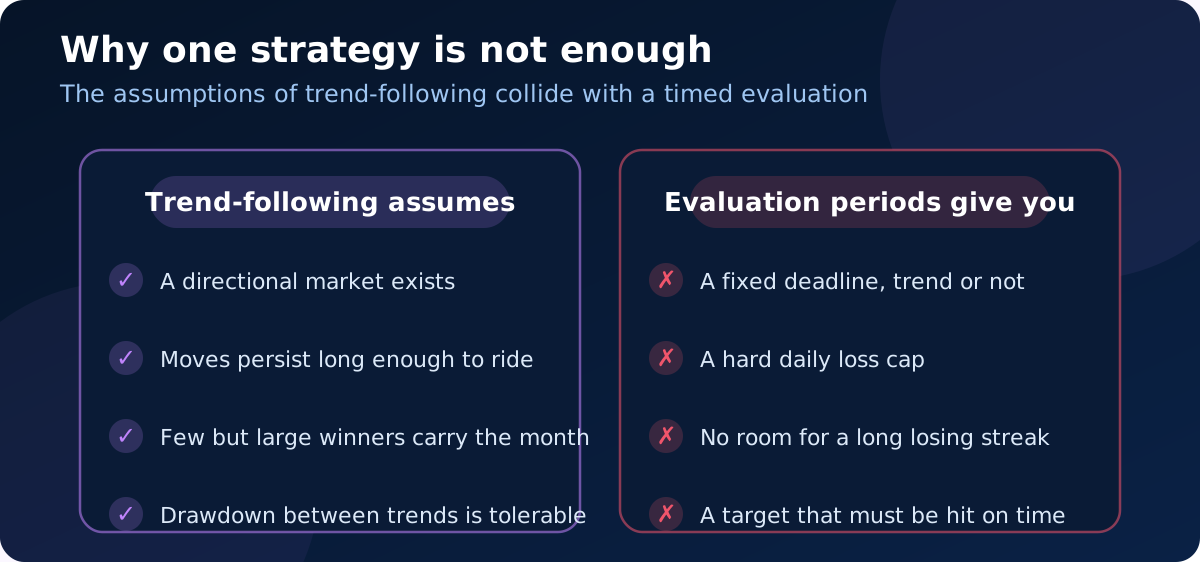
The third row is where accounts are usually lost. Trend systems are built to accept a long series of small losses in exchange for occasional large winners. That maths works well over a year and badly over a four-week evaluation with a daily loss cap — because the losing streak arrives on its own schedule, and the cap does not care that a large winner is statistically due.
The conclusion is not to abandon trend-following. It is to have something to do when conditions do not suit it, so that the alternative to a poor trend setup is a different approach rather than a forced trade.
Range and mean reversion
In a defined range, price repeatedly returns to a middle value, and trading that return is the natural counterpart to trend-following. The approach is well understood; what matters most is recognising the conditions where it stops working.
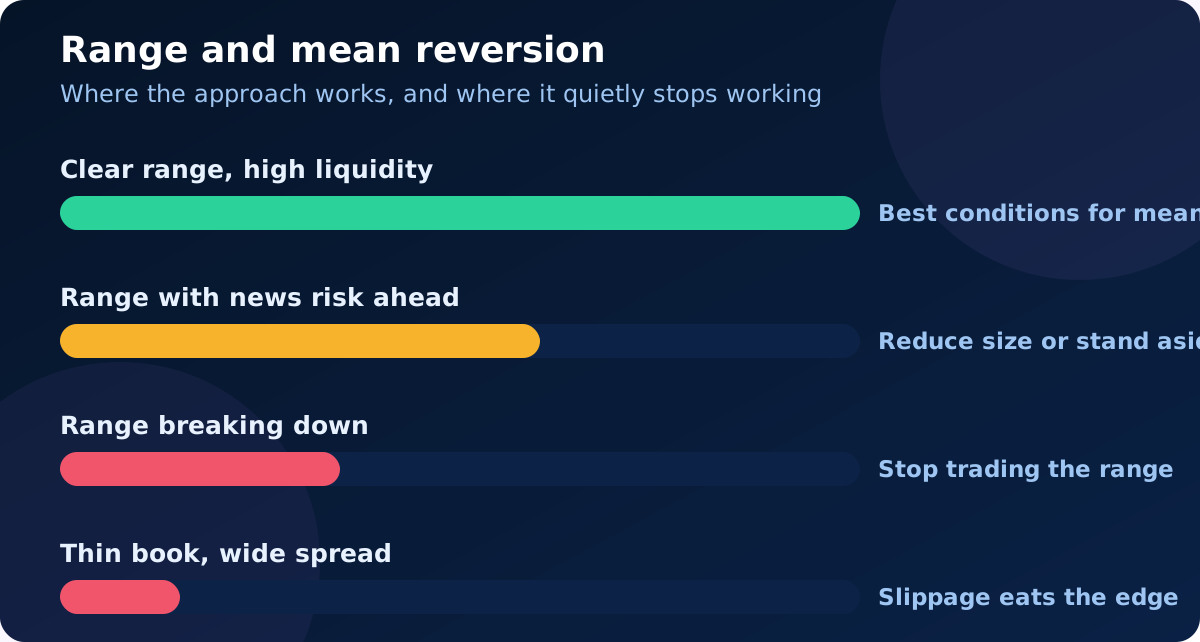
The failure mode to respect is the third bar. Ranges do not announce their end; they simply break, and a mean-reversion trade taken into a breakout becomes a position fighting a new trend. The practical defence is to define in advance what invalidates the range — a close beyond the boundary, for instance — and to treat that as an exit condition rather than a reason to add.
The fourth bar is quieter and costs more than most traders realise. In a thin order book, the spread and slippage on entry and exit can consume most of a modest mean-reversion edge. Depth matters more here than in trend trading, because the profit per trade is smaller. The liquidity tiers are broken down in best crypto pairs for prop trading.
Create your Fundex24 account
Takes a few seconds. You can pick a challenge and add your phone number later.
Trading the session, not the clock
Crypto trades continuously, which is often described as an advantage and rarely examined closely. In practice the same symbol behaves quite differently depending on which region is active — and that variation is exploitable.
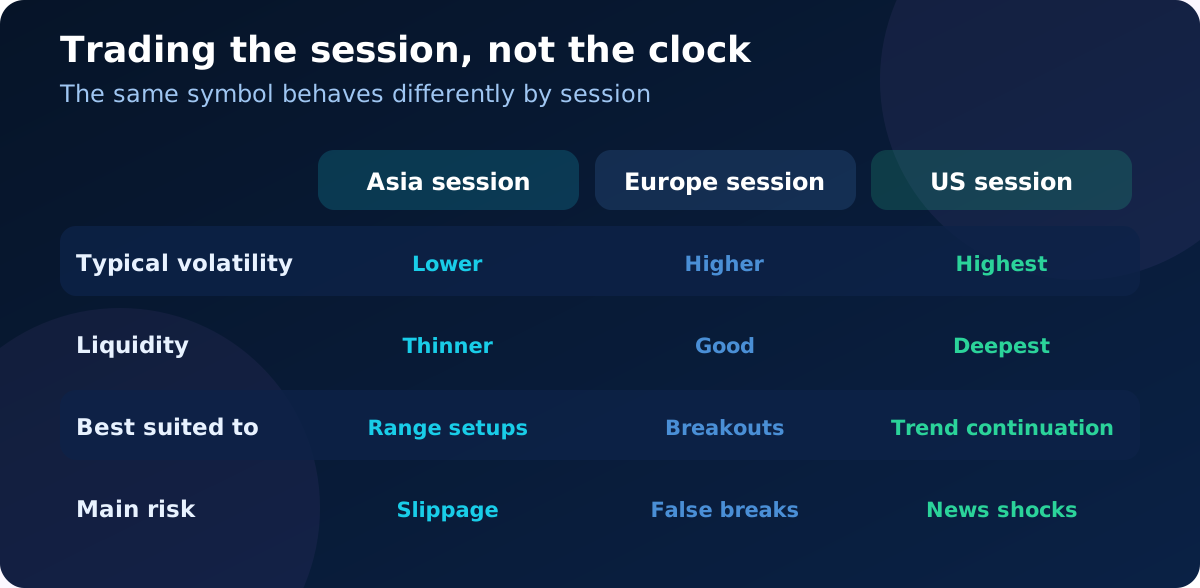
For a trader with limited hours, this is more useful than it first appears: rather than trying to trade everything, you specialise in the session you can actually attend. If your free hours coincide with a quieter, range-prone session, mean reversion is the natural fit and forcing breakout trades will underperform. If you trade the most active session, continuation setups have more room to work but news risk is higher.
The practical step is to log which session each of your trades occurred in, then review win rate by session after a few weeks. Most traders find a clear difference, and simply dropping their worst session improves results without any change in method.
Volatility-aware position sizing
This section is not a strategy — it is the adjustment that lets any of the strategies above survive a drawdown cap. Skipping it is the most common reason a sound method still fails an evaluation.
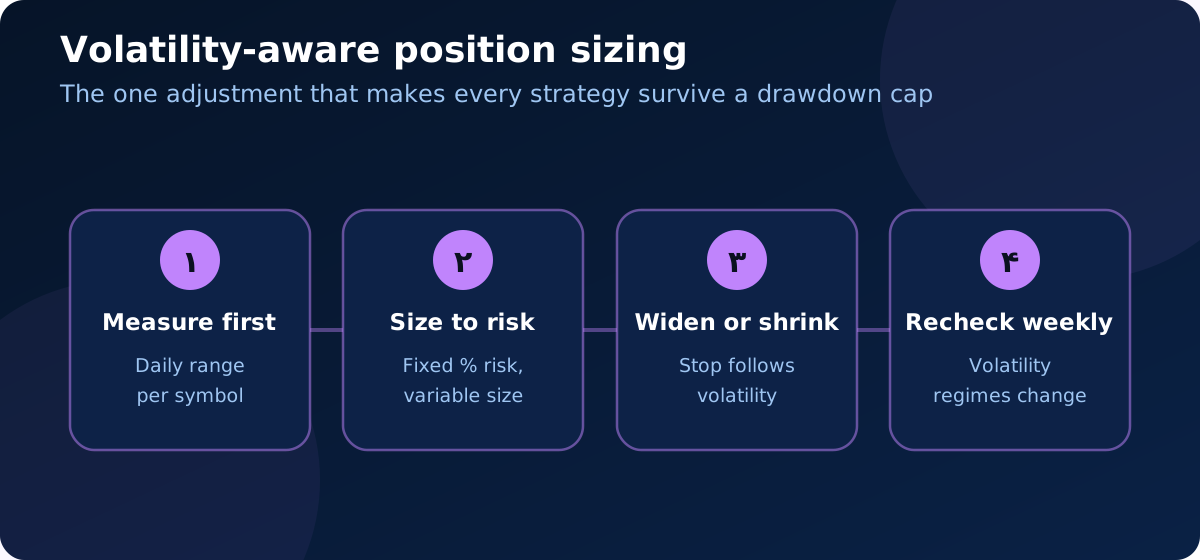
The principle is that a fixed percentage risk requires a variable position size. If one asset moves twice as much per day as another, the same position size carries twice the risk — so the size must halve for the risk to stay constant. Traders who keep size fixed across symbols are unknowingly running a different risk level on every instrument they touch.
The fourth step matters because volatility regimes change. A measurement taken during a quiet month will understate risk when conditions turn, so re-measure regularly rather than setting it once. The underlying maths is covered in crypto prop risk management.
Matching strategy to challenge rules
This is the step that reorders everything else, and almost nobody does it first. Read the rules, then select a strategy that can survive them — not the reverse.
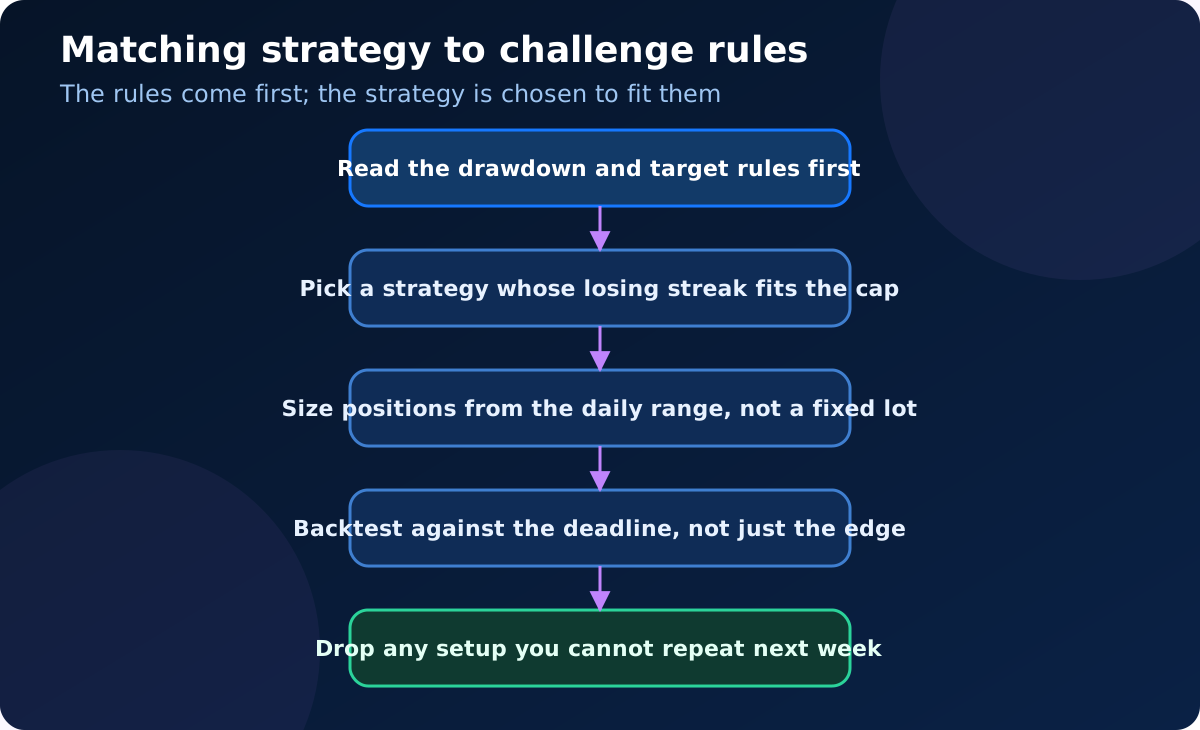
The second step is the practical core. If your method historically produces runs of six consecutive losses and the daily cap only tolerates three at your normal size, the method and the account are incompatible — and no amount of execution quality resolves that. Your options are to reduce size, choose a method with shorter losing runs, or accept a high probability of failing on variance alone.
The final step is a quiet filter that improves most trading plans: drop any setup you cannot repeat next week. A setup that only appeared once, or that you cannot describe precisely enough to recognise again, is not an edge — it is a memory.
Pick a challenge and start trading
Two-step evaluation, transparent rules, profit split up to 80%.
Not sure which size fits? Read the rules · Common questions
Conclusion
Alternative strategies are not exotic techniques; they are what you use when conditions do not suit the approach you default to. Range and mean reversion cover the periods when nothing trends, session specialisation turns limited hours into an advantage rather than a constraint, and volatility-aware sizing is what keeps any method inside a drawdown cap. Above all, choose the strategy after reading the rules, not before. A method with a losing streak longer than your daily cap allows will fail regardless of how good it is over a longer horizon — and an evaluation does not offer a longer horizon.
Frequently asked questions
Should I abandon trend-following?
No. Keep it for the conditions it suits and add an approach for the ones it does not. The aim is to have an alternative to a poor trend setup that is not simply a forced trade.
How do I know the market is ranging?
Define it in advance rather than judging it live — for example, price contained within a band for a set number of periods. Just as importantly, define what invalidates it, and treat that as an exit rather than a reason to add.
Can I run several strategies at once during an evaluation?
It is usually better not to during a first evaluation. Each additional method adds decisions and dilutes the statistics you need for review. One primary approach plus one clearly defined alternative is enough.
Does session specialisation limit my opportunities?
It reduces the number of trades and usually improves their quality. For a trader with limited hours, depth in one session tends to outperform shallow coverage of all of them.
Continue your learning path
Questions about the Fundex24 challenges?
Open the support chat and ask — the team replies right there.
Chat with supportPrefer to read first? Browse the FAQ · Compare the challenges
Continue your learning path
Move from this article to the next useful action or topic.