




A 30-day plan
Most people start crypto prop trading in the wrong order: they buy an evaluation first and work out the strategy afterwards. It is an expensive sequence, because the clock starts when the account activates, and every day spent deciding what to do comes out of the time budget you paid for. This guide gives the opposite order. Four preparation steps that cost nothing, a realistic 30-day plan, the rules to learn before you look at a single chart, and the beginner mistakes that end most first attempts. Nothing here promises a result — it changes the odds by changing the sequence.
Four free steps before you pay
These four cost nothing, take a few hours in total, and affect your outcome more than any indicator you could learn in the same time.
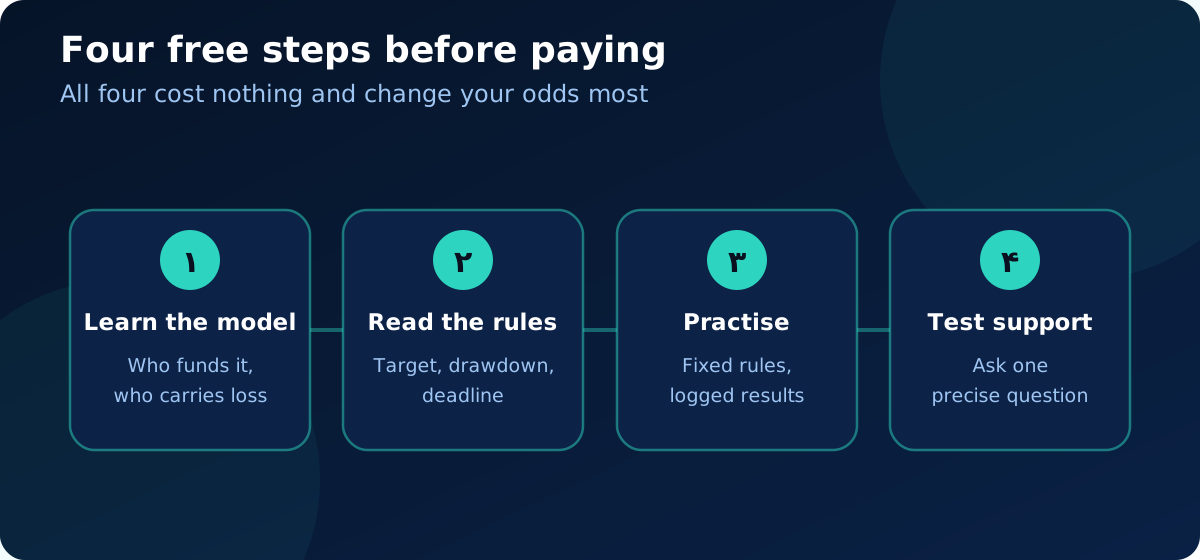
The first one is worth doing properly rather than skimming. Understanding who funds the account and who absorbs a loss is what tells you whether an offer is a prop firm at all — some operations use the label while still asking you to deposit trading capital. The distinction is explained in prop firm versus broker.
The fourth step is the cheapest diagnostic available. Ask support one precise question — for example, exactly how the daily drawdown is calculated — and judge the answer. A firm that can state its own risk rule in two sentences is telling you something; a firm that cannot is telling you something too.
A realistic 30-day start
This pacing is a sample, not a rule. Going slower is fine. Skipping a stage is what causes trouble, because each stage produces the input the next one needs.
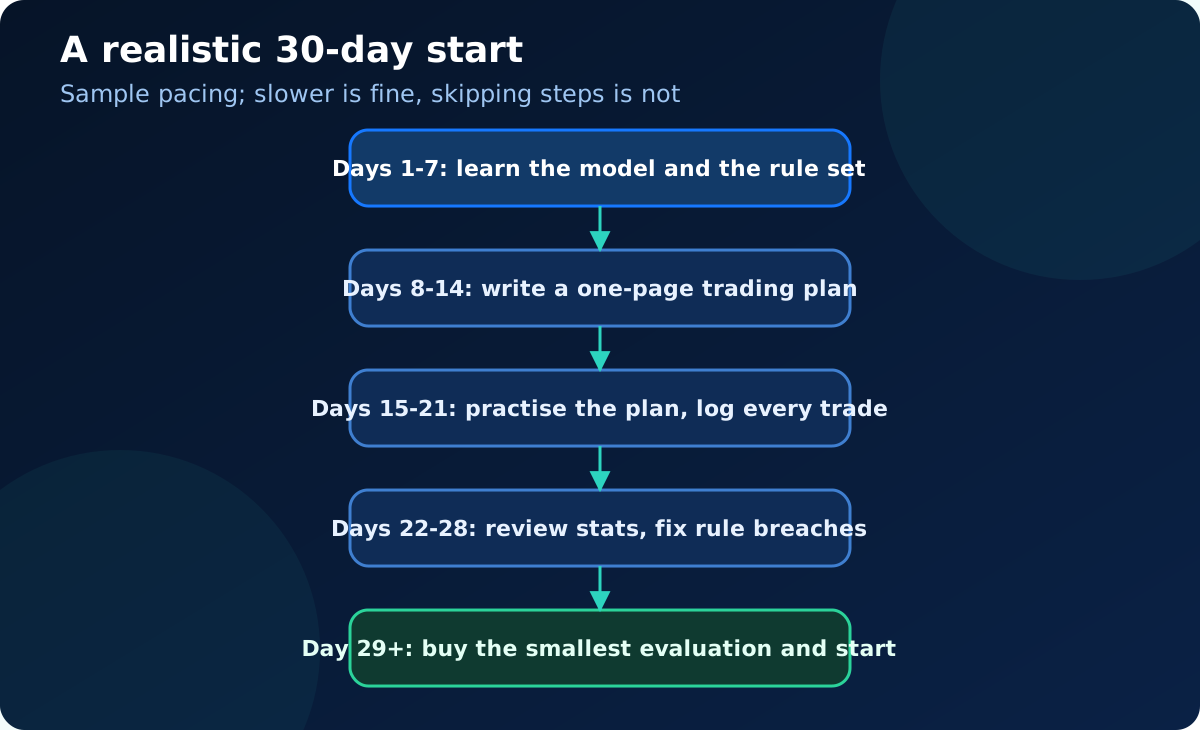
Notice that buying the evaluation is the last step rather than the first. By the time you pay, you already have a written plan, a few weeks of logged practice, and a review of your own rule breaches. That is what turns the fee into a test of an existing process rather than a purchase of hope.
The loop from the fourth stage back to the third is deliberate. If your review shows you broke your own rules repeatedly, the correct response is another practice cycle — not an evaluation. Paying while you still cannot follow your plan simply moves the same problem onto a timed account.
Create your Fundex24 account
Takes a few seconds. You can pick a challenge and add your phone number later.
Learn the rules before the charts
Most failed evaluations are not lost on a bad forecast. They are lost by breaching a rule the trader had not fully understood. These four are worth knowing precisely, in this order.
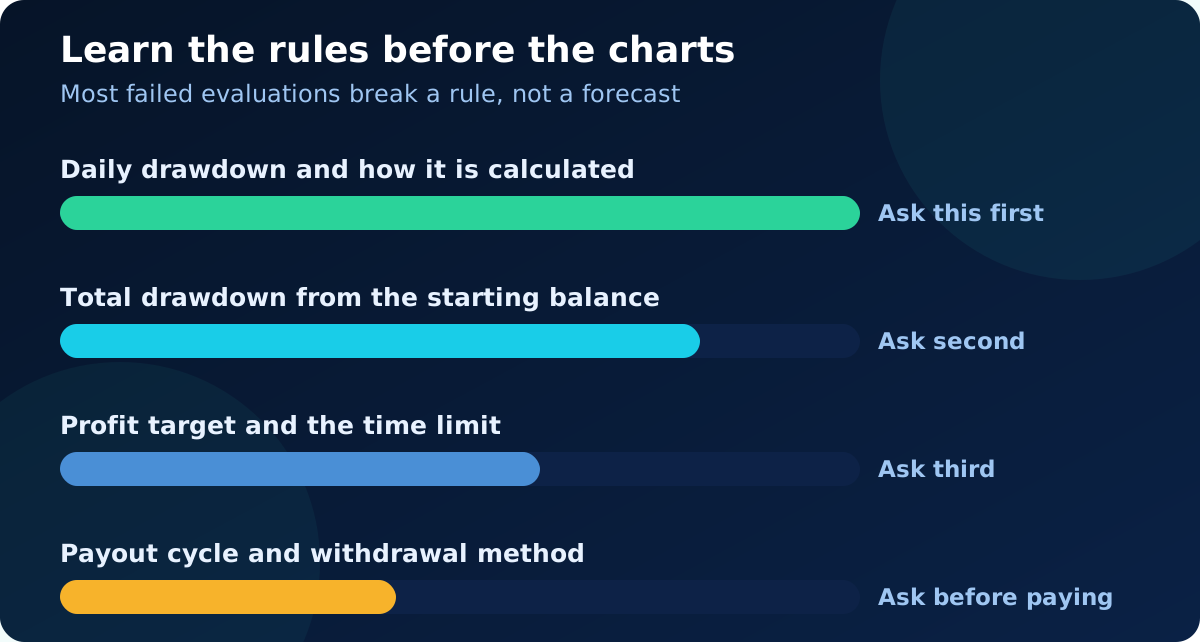
The first one hides a detail that catches people out: daily drawdown can be measured from the balance at the start of the day, or from the account’s highest historical balance. Those two produce different limits on the same day, and assuming the wrong one is how traders get closed out on a day they believed was safe. Ask, and write the answer down. The full rule set is broken down in crypto prop drawdown rules.
The fourth is the one beginners skip entirely, and it is the one that determines whether any of this reaches your wallet. Confirm how payouts are made and on what cycle before you pay, not after you have passed.
Choosing your first account size
The most common first mistake is buying the largest size the budget allows. The logic feels right — bigger account, bigger income — but it inverts the actual economics of learning.
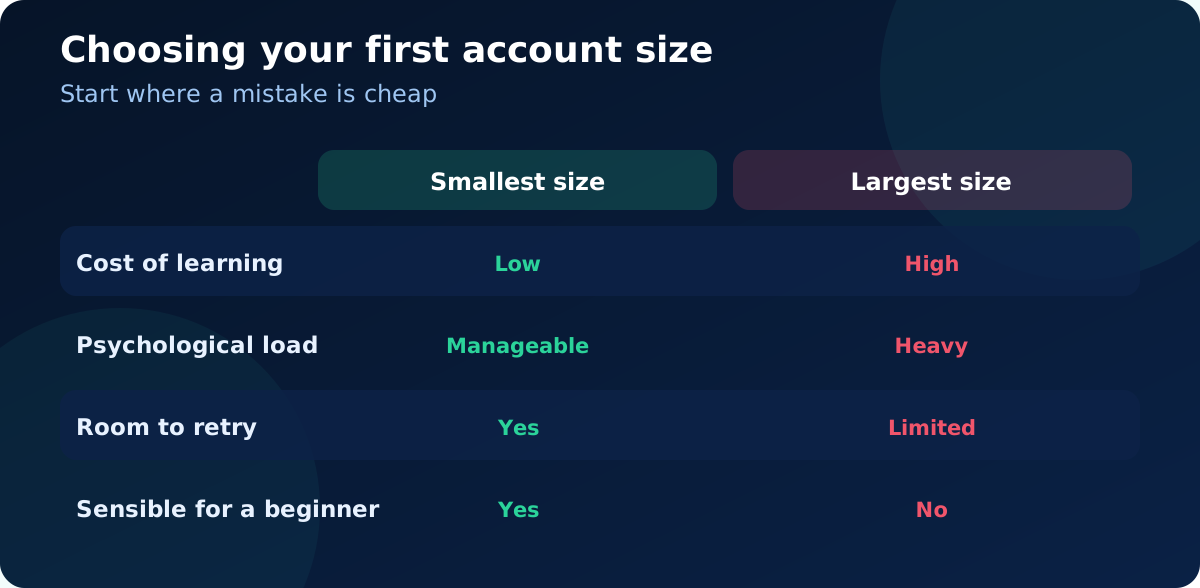
Whatever your trading experience, a new firm brings a learning cost: its rules, its platform, its payout process. That cost is unavoidable, so the sensible move is to pay it on the smallest size available. If you pass, you can scale afterwards on performance rather than on budget.
There is a psychological argument too. Larger size means larger dollar swings, and larger swings mean more pressure at exactly the point where you most need to follow rules you have not yet made automatic.
Prepared start versus rushed start
Comparing the two lists below is the fastest way to predict how a first evaluation will go — and the difference is preparation, not talent.
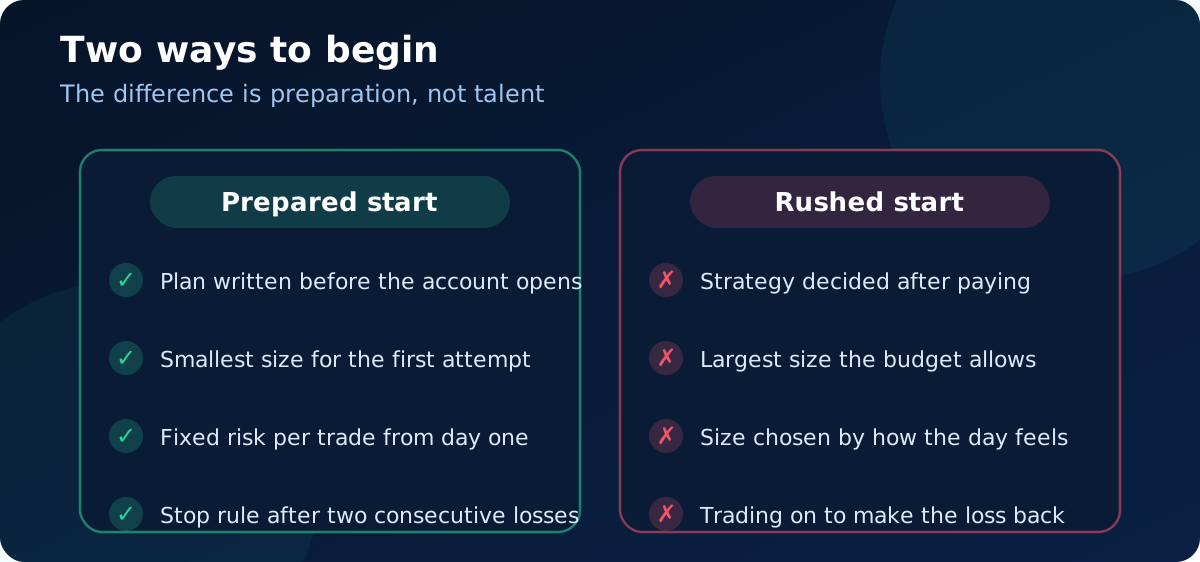
The last row is the one that ends most accounts. After a loss, the urge to trade on and win it back feels like determination; statistically it is the single most reliable way to turn a manageable day into a closed account. Decide the stop rule in advance — two consecutive losses and the session is over — because in the moment your mind will argue against it convincingly.
Nothing on the prepared side requires talent or capital. All four are decisions made before the market opens, which is precisely why they hold when it matters.
Pick a challenge and start trading
Two-step evaluation, transparent rules, profit split up to 80%.
Not sure which size fits? Read the rules · Common questions
Conclusion
Starting crypto prop trading well is mostly a sequencing problem. Learn the model, read the rules, write a one-page plan, practise it with logged results — and only then buy the smallest evaluation available. That order costs nothing extra and turns the fee into a test of a process you already have, rather than a bet on one you hope to develop under a deadline. Be clear-eyed about the outcome: most people do not pass on the first attempt, and the fee is lost when they do not. What the sequence changes is whether your attempt is a fair test of your trading, or a test of how fast you can improvise.
Frequently asked questions
How much capital do I need to start?
The trading capital comes from the firm. What you pay is the evaluation fee, which is fixed, known in advance, and also the maximum you can lose. Start with the smallest size so that the learning cost stays low.
Do I need previous trading experience?
There is no formal requirement, but starting without a written plan and a few weeks of practice usually ends the evaluation early. Experience helps; the ability to follow a fixed risk rule matters more.
How long before I can expect a payout?
It depends on how quickly you pass and on the settlement cycle. From a standing start, several months is realistic. Much faster usually means more risk was taken, not more skill applied.
What happens if I fail the evaluation?
The account closes and the fee is lost. No further personal capital is at risk and no debt is created. Most traders review their logged stats, correct the rule breaches, and try again.
Continue your learning path
Questions about the Fundex24 challenges?
Open the support chat and ask — the team replies right there.
Chat with supportPrefer to read first? Browse the FAQ · Compare the challenges
Continue your learning path
Move from this article to the next useful action or topic.