




Two different businesses
A prop firm and a broker can look almost identical from the outside. Both sign you up online, both hand you a platform, both show charts and a list of tradable symbols, and both talk in the same market vocabulary. Yet they are not variations of one business — they are two different businesses that happen to share an interface. The difference sits at the most fundamental level possible: whose capital is in the market, and whose balance a loss comes out of. This guide sets the two models side by side, explains why they get confused so often, and gives you the single question that tells them apart in seconds.
Two different businesses
The clearest way to separate them is to ask how each one makes money. A broker is an access provider: you deposit your own funds, it gives you market access, and it earns from commissions and spread on the volume you trade. A prop firm is a profit partner: it posts its own capital, you trade it after proving your skill, and it earns a share of the profit you produce.
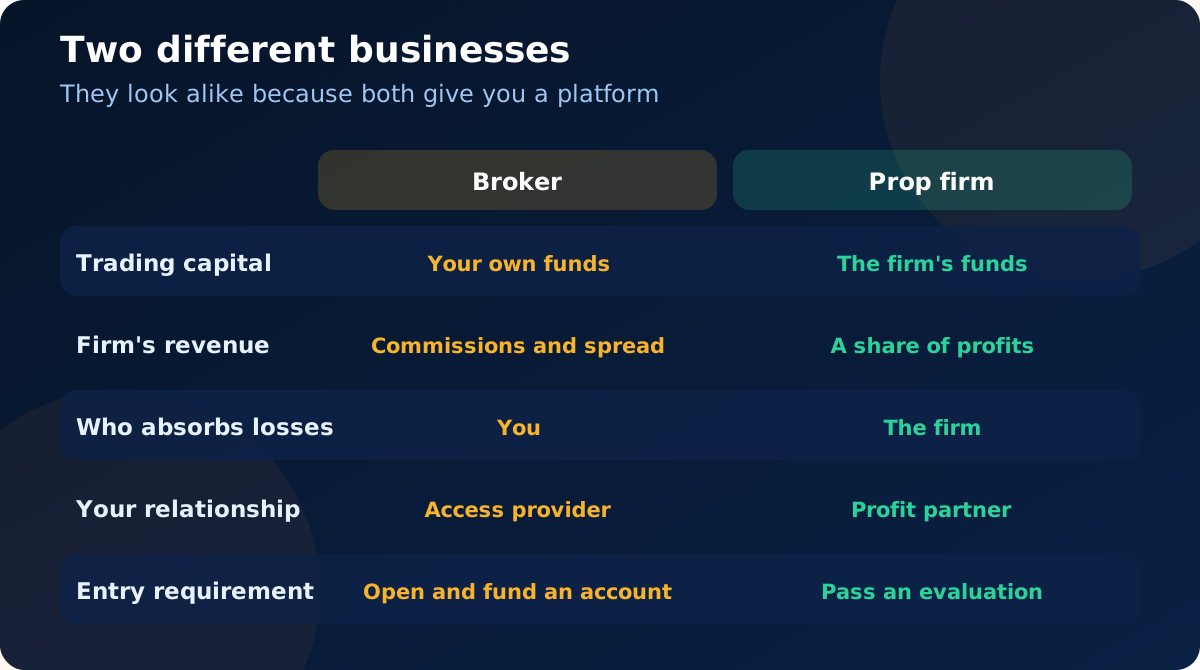
The revenue row has a consequence worth sitting with. Because a broker earns from your trading volume, its interest is in you trading more — whether or not you make money doing it. A prop firm earns from your profit share, so its interest is in you actually being profitable. That alignment is why prop firms tend to invest in risk tooling, rule enforcement and trader education: a disciplined trader is directly worth more to them.
This is not a claim that brokers are acting badly. It simply means the incentives point in different directions, and knowing which direction you are dealing with tells you a lot about the product you are being sold.
Whose capital is actually at risk
If you remember one thing from this page, make it this. It is the only question you need in order to classify any firm you come across.
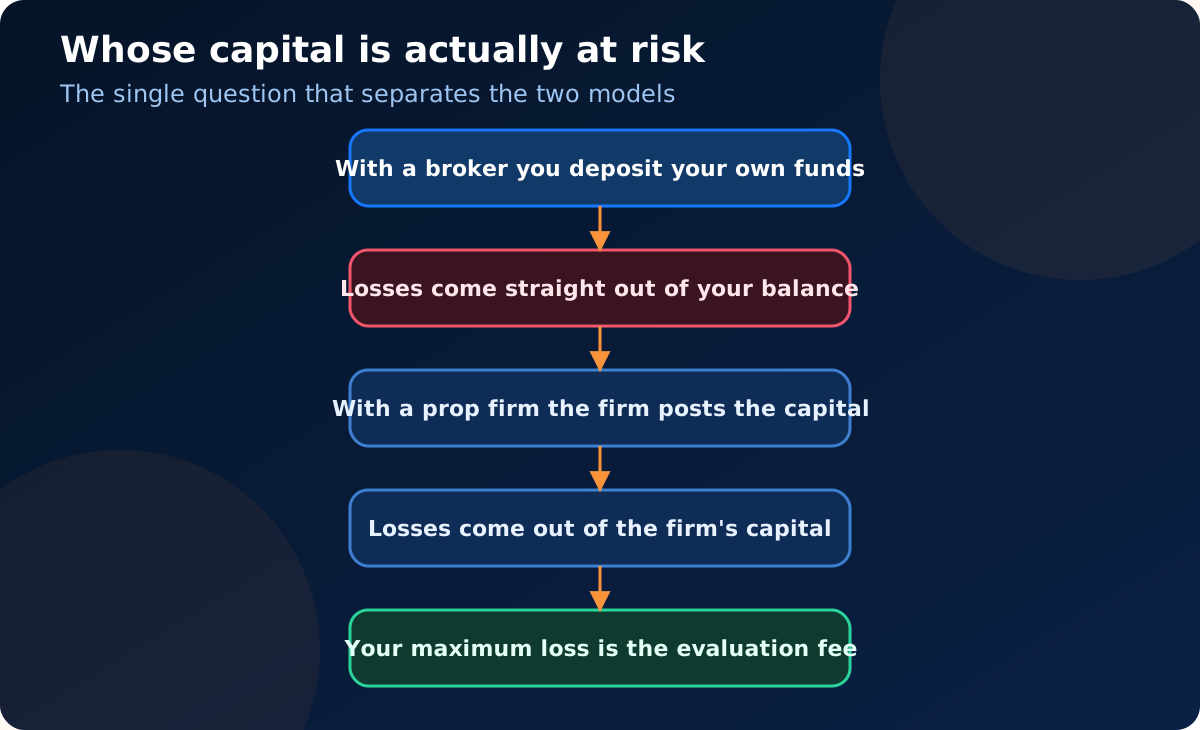
With a broker, a ten percent drawdown means ten percent of your own money is gone. With a prop firm, the same drawdown comes out of the firm’s capital, and the worst outcome for you is that your evaluation closes and the fee you paid is lost — an amount you knew in advance and chose to risk.
That asymmetry is the whole point of the model, and it has a psychological effect that matters in practice: when your maximum loss is capped and known before you start, you make calmer decisions. A trader risking rent money behaves differently from one risking a fixed, affordable fee, regardless of skill.
Create your Fundex24 account
Takes a few seconds. You can pick a challenge and add your phone number later.
Why the two get confused
The confusion is understandable rather than careless. From a user’s point of view, the first hour with either one feels the same.
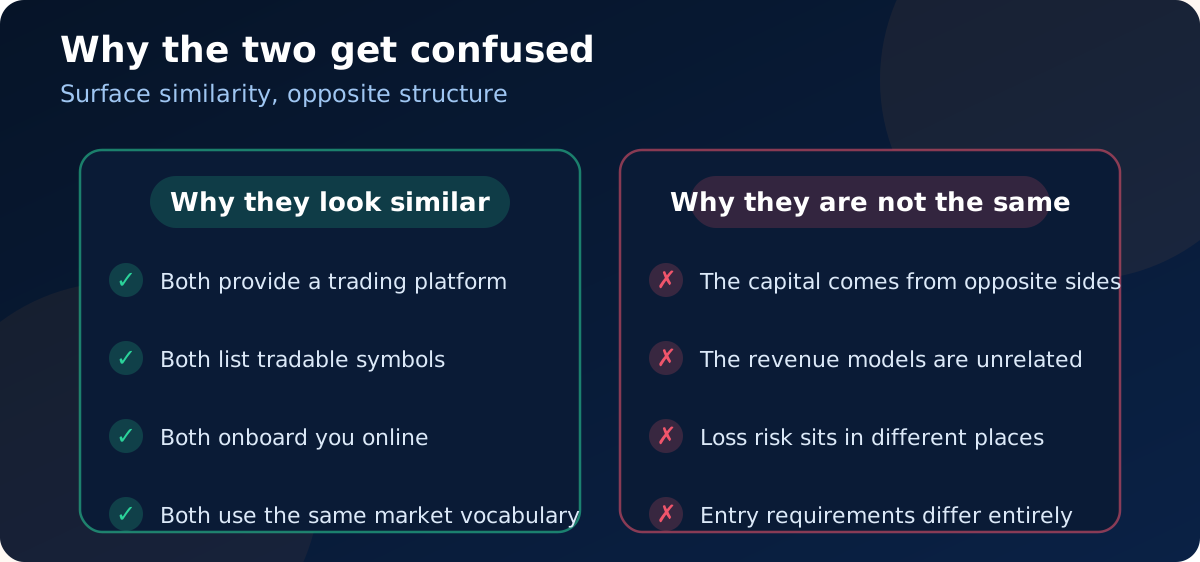
Occasionally the ambiguity is cultivated rather than accidental. A firm that uses both labels and defines neither is usually relying on you not asking. One question resolves it: is the trading capital mine or yours? A legitimate firm of either type answers immediately and without hedging, because the answer is simply what its business is.
Which one do you actually need?
Neither model is superior. The right choice depends on whether what you are short of is capital or access.
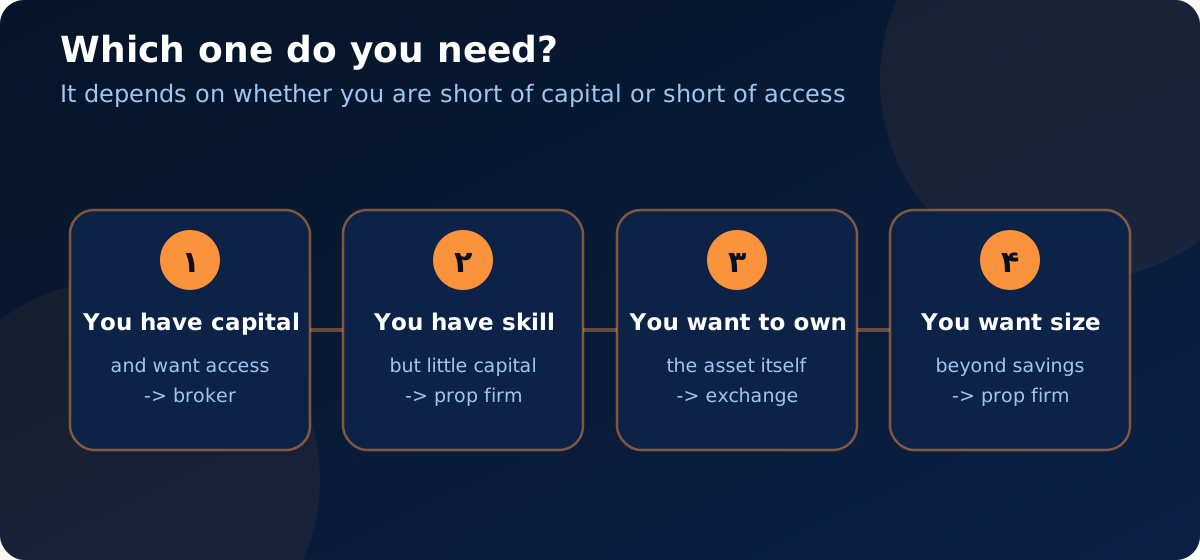
The third case deserves separating out, because it is a common mismatch. If your goal is to own the asset — buy bitcoin and hold it — then neither model fits: you want an exchange. In a prop account you are trading an instrument that tracks the price, not accumulating the asset, and the objective is short-horizon profit rather than long-term investment. Choosing a prop firm for a buy-and-hold goal is a mismatch no amount of skill fixes.
When a firm blurs the line
Because the two models look alike, some operations deliberately sit between them. These signals separate a clear business from a vague one.
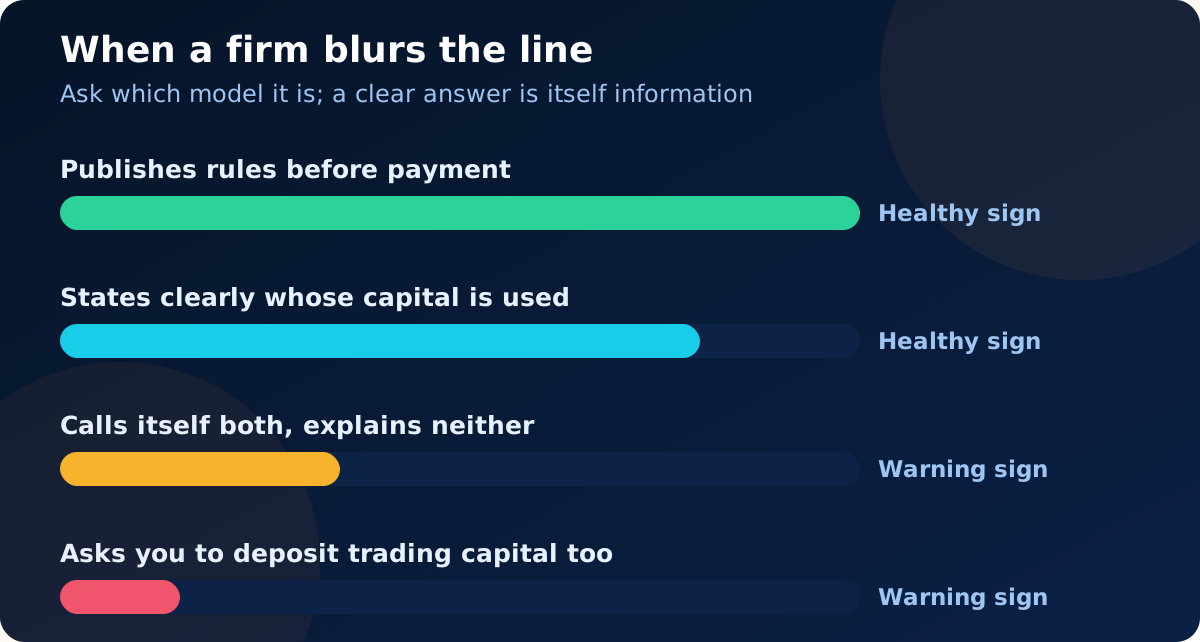
The final bar is the one to watch most closely. A firm that describes itself as a prop firm but also asks you to deposit trading capital has effectively made you carry the risk while keeping a share of the upside. That is not the prop model; it is a broker relationship with a profit split attached, and you should price it accordingly.
The healthy signals are equally simple: rules published before payment, and a plain statement of whose capital is used. Both are free for you to verify, and a firm confident in its model has no reason to withhold either.
Conclusion
Brokers and prop firms only resemble each other at the surface. A broker works with your money and earns from commissions; a prop firm works with its own money and earns from a profit share. That single difference determines everything downstream — who absorbs a loss, what the entry requirement is, and whether the firm’s incentives point toward your profitability or your trading volume. To classify any firm in seconds, ask whose capital funds the trades. If the answer is clear, you know what you are dealing with. If it is not, that vagueness is the answer.
Pick a challenge and start trading
Two-step evaluation, transparent rules, profit split up to 80%.
Not sure which size fits? Read the rules · Common questions
Frequently asked questions
Is a prop firm a type of broker?
No. They are separate businesses with different revenue models. A broker provides access to markets using your capital; a prop firm provides capital to traders who pass an evaluation and keeps a share of the profits.
Do I deposit trading capital with a prop firm?
No. What you pay is an evaluation fee, not trading capital. It never enters the market, and it is also the maximum you can lose financially.
Can I own the crypto I trade at a prop firm?
No. You trade an instrument that tracks the price rather than taking custody of the asset. If ownership is your goal, an exchange is the right venue.
Which is better for a beginner?
It depends on your constraint. If you have capital you can afford to risk and want to own assets, an exchange or broker fits. If you have skill but limited capital, the prop model caps your downside at a known fee, which is usually the safer way to learn.
Continue your learning path
Questions about the Fundex24 challenges?
Open the support chat and ask — the team replies right there.
Chat with supportPrefer to read first? Browse the FAQ · Compare the challenges
Continue your learning path
Move from this article to the next useful action or topic.