




Practice routine
A short practice run needs a demo trading plan, or the days slip away in random clicks. This routine for the Fundex24 practice account spreads the six practice milestones over three sessions, keeps every trade at the same small risk and ends with a review that tells you what to fix.
Why does a short practice run need a plan?
Because the run is currently 3 days, and without a plan most people spend day one clicking around and the last day rushing trades to fill a counter. The practice card shows how many days are left, and the length can change, so build the plan around the card rather than the calendar.
This plan has one job: get the six milestones done in an order that builds habits you keep. It does not try to grow the $10,000 balance. A run that ends flat with every rule followed teaches more than one that ends well up after a few lucky, oversized trades.
Give each day one focused session of about an hour. Crypto trades around the clock, so pick an hour that suits your life and keep it.
The six milestones behind this demo trading plan
The Fundex24 practice panel shows six milestones as progress, and the plan spreads them across the three days like this:
- Close your first trade: day 1.
- Protect a position with a stop loss: day 1.
- Set a take profit: day 1.
- Place a limit or stop entry: day 2.
- Come back on a second day: day 2.
- Trade ten times: day 3, and only if the setups are there.
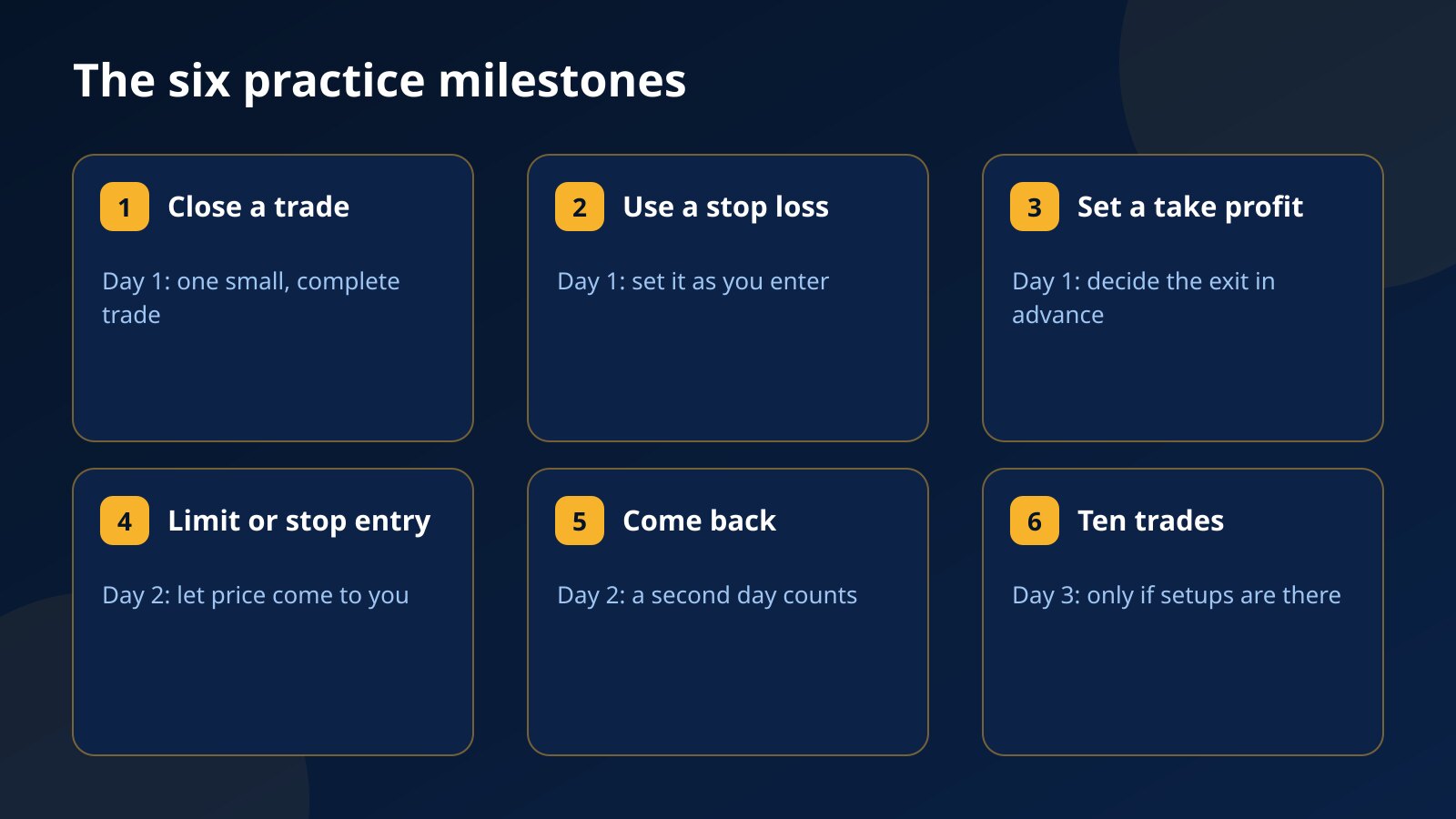
When all six are done, the panel says you have the terminal down and points you to the plans. Treat that message as the end of a checklist, not as proof that you are ready for anything bigger.
Day 1: learn the panel and take one protected trade
Day one is about a single clean trade. Spend the first part of the session just looking, then trade once.
- Find balance, equity, the order panel, the Leverage setting and the TP / SL fields before placing anything.
- Set leverage low, between 1:2 and 1:5, and fix your risk per trade, for example 1% ($100).
- Take one small trade on BTC/USDT with the stop loss and take profit set as you enter.
- Let it reach the stop or the target, or close it for a reason you wrote down beforehand.
- Write your first journal line.
That one trade ticks off three milestones: closing a trade, protecting it with a stop loss and setting a take profit. If you want every click explained, the step-by-step first trade guide covers it, including the sizing arithmetic.
Then stop. The pull on day one is to keep going because nothing is at stake, and that is exactly how practice turns into a slot machine.
Create your Fundex24 account
Takes a few seconds. You can pick a challenge and add your phone number later.
Day 2: pending orders and a second visit
Showing up is the first result of day two, because returning on a second day is itself a milestone. The second goal is learning to let price come to you.
- Read yesterday’s journal line before opening the chart.
- Mark one level where you would go long and one where you would go short.
- Place a limit or stop entry at one of them, with a stop loss and take profit attached.
- Take two or three more trades at exactly the same risk as day one.
- Cancel any pending order you no longer believe in before you log off.
Keep the risk identical even if day one went well. Raising the size after a win is the first sign that results are running the plan instead of the plan running the results.
Day 3: finish the count, then review
Complete ten trades only if the chart offers setups you would actually take. Arriving on day three with five trades and stopping at seven is a better lesson than forcing three poor entries to fill a progress bar.
Keep the last part of the session for review. The practice card shows four stats, and each answers a different question:
- Trades: did you trade at the pace of your plan, or chase activity?
- Win rate: read it next to your loss sizes; a high win rate with one huge loser is a warning sign.
- Net P&L: meaningful only if your risk per trade stayed constant.
- Active days: did you practise across days, or cram it all into one?
Finish by writing down the one habit you would fix first. For most beginners it is either moving the stop during a trade or a position size that quietly crept up.
What goes in a practice trading journal?
One line per trade, filled in partly before entry and partly after the close, is enough. These columns expose bad habits fastest:
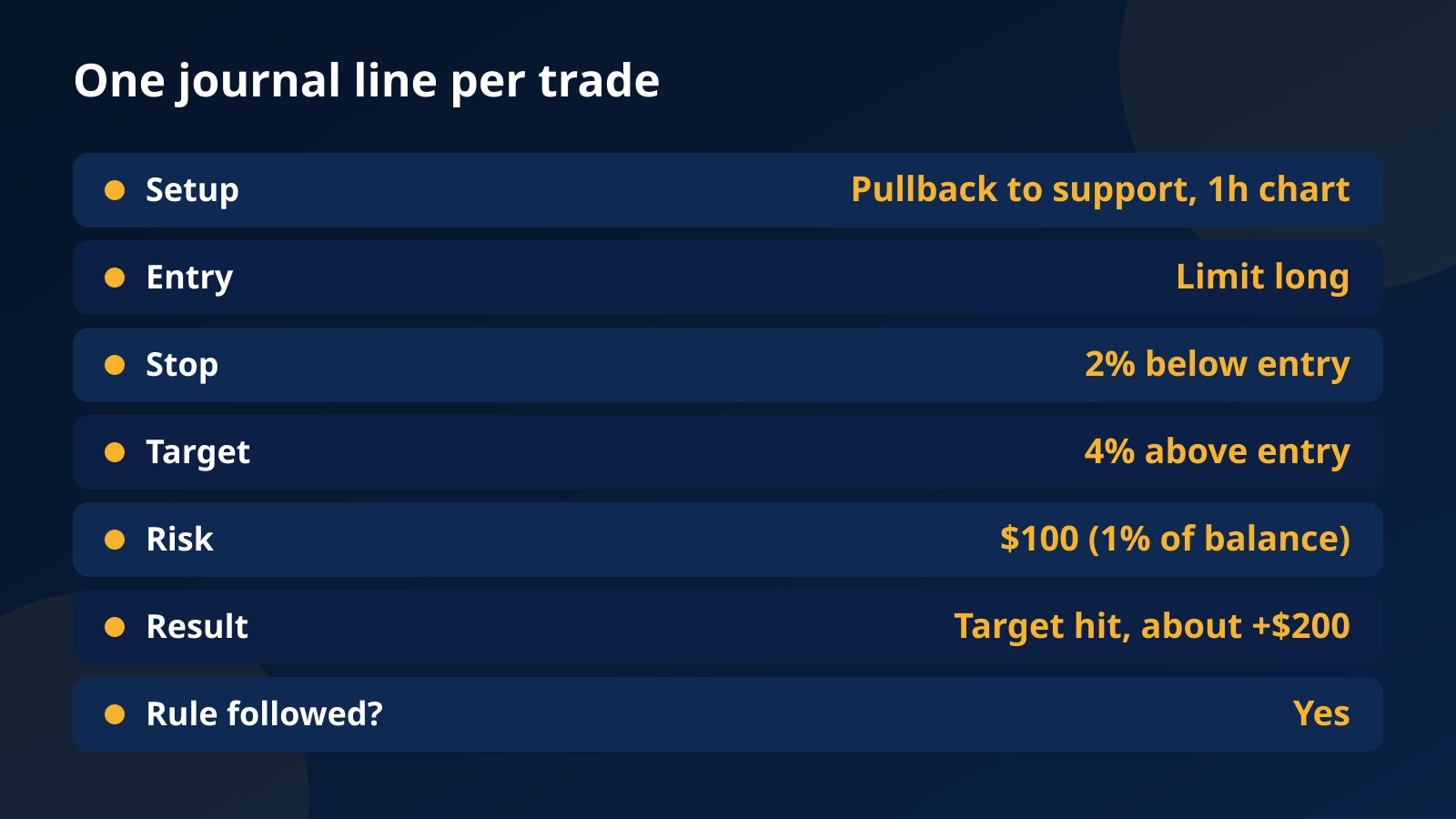
The rule-followed column matters most. A losing trade with the rule kept is a good trade; a winner where you dragged the stop further away is a habit you will pay for later. Paper, a spreadsheet or a notes app all do the job.
How should you use resets during the run?
Use a reset as a consequence, not an escape. You get 3 in total for the whole run, at most 2 in one day and 30 minutes apart; a reset closes open positions, cancels pending orders and restores the $10,000 balance, while your history stays.
A simple rule works well: if you break your own daily loss limit, the reset waits until your next session. The reset then marks the end of a bad day instead of erasing it, and the kept history shows exactly what went wrong when you review.
What comes after the three days?
Judge the run by your journal, not the P&L. If most lines say the rule was followed, the basics are in place; if not, the mistakes are now written down and specific enough to work on.
Some traders then look at a paid challenge from $29, which uses the same terminal with drawdown rules and leads to a funded account with an 80% profit split once both stages are passed. This is known as prop trading, and our guide to crypto prop trading explains the model. Before paying anything, rehearse the challenge rules on demo and read about the demo habits that cost a fee later.
Pick a challenge and start trading
Two-step evaluation, transparent rules, profit split up to 80%.
Not sure which size fits? Read the rules · Common questions
Ready for day one? Open your free practice account, verify your phone, open Accounts from the sidebar, press Start practising and take your first trade on BTC/USDT.
Trading crypto with leverage is risky, and practice results are not a forecast of how you will do with real money.
Demo trading plan FAQ
Can I finish the plan in a single day?
Not completely. One milestone asks you to come back on a second day, so you need at least two separate sessions, and the night in between helps you spot mistakes.
What if I use up all my resets?
You finish the run on whatever balance you have. Trading a smaller balance carefully is still good practice, as long as your risk stays a fixed share of it.
Does a high win rate on demo mean I am ready?
Not on its own. Win rate says nothing about how big the losses were, and virtual money makes it easy to hold losers you would close with your own money.
How many practice trades should I take each day?
Fewer than you expect. Two to four planned trades a day, each with a journal line, teach more than twenty impulsive ones.
Questions about the Fundex24 challenges?
Open the support chat and ask — the team replies right there.
Chat with supportPrefer to read first? Browse the FAQ · Compare the challenges
Continue your learning path
Move from this article to the next useful action or topic.